- Hauling-LLC
A Complete Guide to the Types of Items Junk Removal Companies Can Remove
Junk removal companies can take many common items from homes, businesses, garages, yards, and renovation areas. These services are often used when unwanted belongings are too large, too heavy, or too time-consuming to remove without help.
Most companies handle everyday clutter, furniture, appliances, yard debris, and certain construction materials. However, accepted items can vary depending on local disposal rules, company policies, and whether an item requires special handling.
This blog explains what items a junk removal company can usually take and which materials may have restrictions before scheduling a pickup.
1. Household Furniture and Everyday Clutter
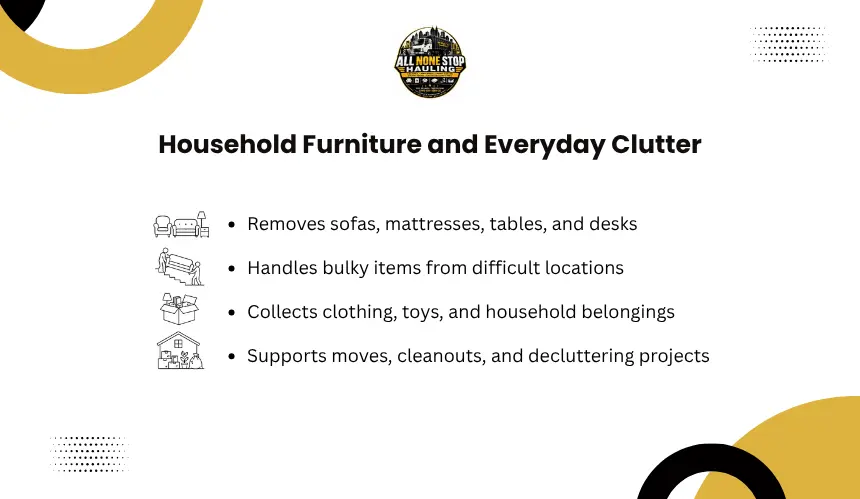
Household furniture and general clutter are among the most common items collected by junk removal companies. Whether homeowners are cleaning out a single room, preparing for a move, or completing a full property cleanout, these everyday items often make up a large portion of the materials being removed.
Common furniture items that can be removed
Most junk removal companies accept furniture such as sofas, sectionals, recliners, mattresses, bed frames, dressers, dining tables, chairs, desks, bookshelves, and entertainment centers. They can also remove bulky items that are difficult to transport using a standard passenger vehicle.
The ability to remove large furniture saves homeowners the effort of lifting, loading, and arranging transportation. Many companies also handle furniture from upstairs rooms, basements, garages, or other hard-to-reach areas.
General household junk and unwanted belongings
In addition to furniture, junk removal companies commonly collect boxes of unwanted household items, clothing, toys, decorations, kitchenware, storage bins, exercise equipment, luggage, and other miscellaneous belongings that are no longer needed.
These services are especially useful during home cleanouts, downsizing projects, estate cleanouts, or seasonal decluttering. Removing large amounts of household clutter at one time helps free up valuable living and storage space more efficiently.
2. Appliances and Electronic Waste
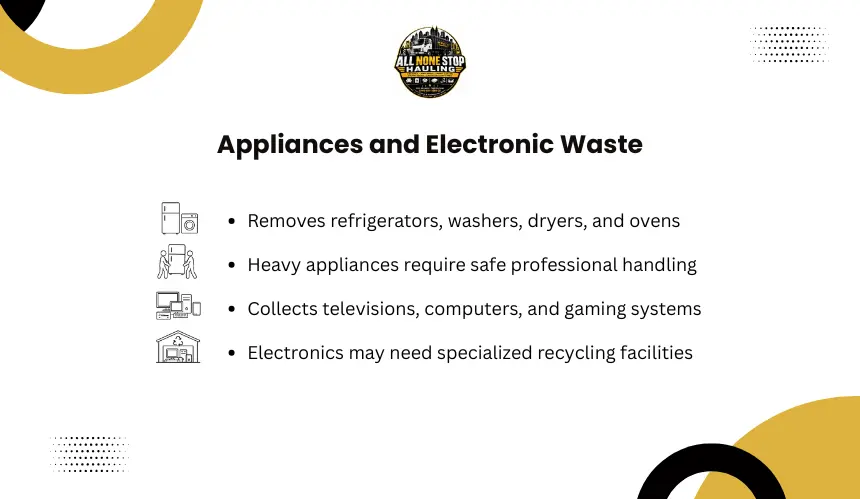
Many junk removal companies also remove old appliances and electronic equipment that are difficult to dispose of through regular household trash collection. Because these items are often bulky or contain recyclable components, they typically require special handling during the removal process.
Large household appliances
Common household appliances accepted by many junk removal companies include refrigerators, washing machines, dryers, dishwashers, ovens, stoves, microwaves, freezers, and water heaters. These items are heavy and often require proper equipment and multiple people to remove them safely.
Some appliances may also require additional preparation before disposal, particularly if they contain refrigerants or other regulated components. Homeowners should confirm any special requirements when scheduling the pickup.
Televisions, computers, and other electronics
Electronic waste commonly includes televisions, desktop computers, laptops, monitors, printers, gaming systems, speakers, and other small electronic devices. Many junk removal companies collect these items and transport them to facilities where they can be recycled or processed appropriately.
Because electronic devices may contain materials that should not be placed in standard landfills, disposal requirements can vary by location. Asking in advance which electronics are accepted helps ensure they are handled according to local regulations.
3. Yard Waste and Outdoor Materials
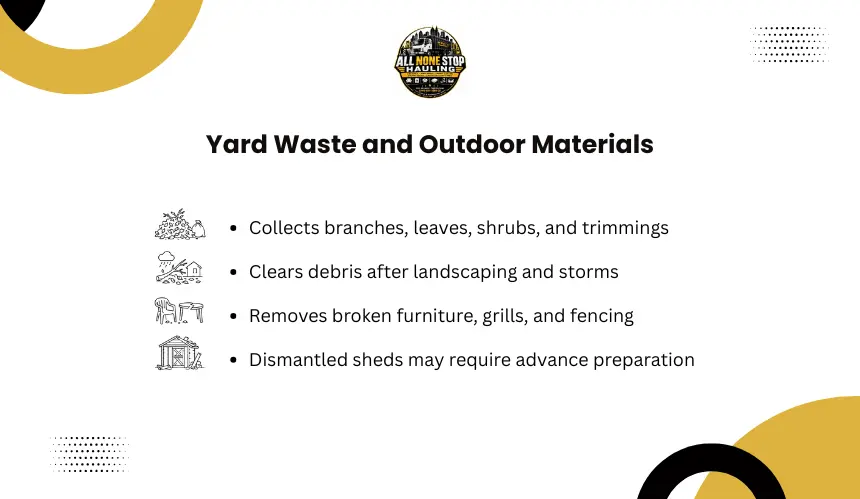
Junk removal companies often help homeowners clear outdoor spaces by removing yard waste and unwanted materials that accumulate over time. Whether the project involves seasonal landscaping, storm cleanup, or replacing outdoor features, professional removal services can simplify the cleanup process and restore usable space around the property.
Branches, leaves, and landscaping debris
Many companies accept common yard waste such as tree branches, leaves, grass clippings, shrubs, bushes, garden trimmings, and small logs. These materials often accumulate after routine landscaping or severe weather and can be difficult to dispose of in large quantities.
Removing yard debris promptly helps keep outdoor areas clean and makes it easier to maintain the landscape. It also prevents large piles of organic waste from taking up valuable space around the property.
Fencing, sheds, and outdoor furniture
Junk removal companies may also collect outdoor items such as broken patio furniture, grills, fencing materials, play equipment, storage bins, and sections of small sheds that have already been dismantled. These bulky items are often difficult to transport without the appropriate vehicle and equipment.
Because larger outdoor structures may require disassembly before removal, homeowners should confirm the company’s requirements when requesting a quote. Providing details about the size and condition of the items helps the company prepare for the job more efficiently.
4. Construction and Renovation Debris
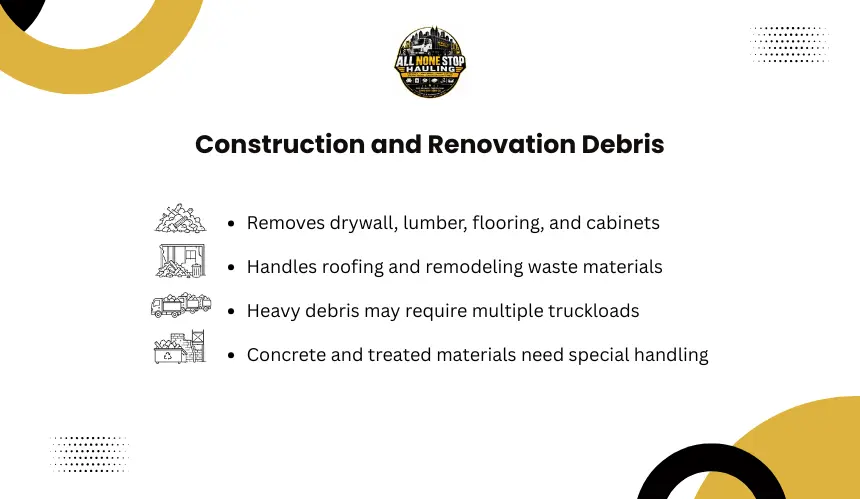
Home improvement projects often generate large amounts of waste that cannot be placed in regular household trash. Leftover construction materials are usually bulky, heavy, and difficult to transport, making junk removal services a practical option after remodeling or renovation work has been completed.
Drywall, lumber, flooring, and roofing materials
Many junk removal companies collect common renovation debris such as drywall, lumber, plywood, flooring, carpet, laminate, tiles, cabinets, countertops, shingles, and insulation. These materials often come from kitchen remodels, bathroom renovations, room additions, or general home improvement projects.
Because construction debris can be heavy, companies usually assess the amount of material before providing a quote. Larger renovation projects may also require additional labor or multiple loads, depending on the volume of waste.
Materials that may require special handling
Not every construction material can be disposed of in the same way. Items such as concrete, bricks, asphalt, treated wood, or materials containing hazardous substances may be subject to different disposal requirements based on local regulations and the capabilities of the junk removal company.
Before scheduling a pickup, homeowners should let the company know exactly what types of renovation debris need to be removed. Providing this information in advance helps determine whether any materials require specialized handling and allows the company to prepare the appropriate equipment for the job.
Frequently Asked Questions
Can a junk removal company remove items from inside the home?
Yes. Most junk removal companies remove items from wherever they are located, including basements, attics, garages, upstairs rooms, and storage areas. Homeowners typically do not need to move heavy items outside before the crew arrives.
Do appliances need to be disconnected before pickup?
This depends on the type of appliance. Some companies ask homeowners to disconnect appliances such as washing machines, dryers, or refrigerators before the scheduled pickup, while others may offer assistance if this is arranged in advance.
Will a junk removal company recycle or donate usable items?
Many companies separate recyclable materials and may donate usable furniture, appliances, or household goods when they meet local donation guidelines. The exact process depends on the condition of the items and the company’s recycling or donation partnerships.
Can junk removal companies handle estate or foreclosure cleanouts?
Yes. Many companies provide complete cleanout services for estates, foreclosures, rental properties, and homes being prepared for sale. These projects often involve removing furniture, household belongings, and general clutter from multiple rooms.
Should construction debris and household junk be separated before pickup?
It is helpful, but not always required. Separating different types of materials can make the removal process more efficient and may help the company determine the most appropriate disposal method before the job begins.